Research guide · Updated November 15, 2026
BPC-157, in pen and vial.
BPC-157 is a synthetic 15-amino-acid peptide studied mainly in cell and animal research. It is not FDA-approved, it is banned in sport, and in the U.S. it is sold for laboratory research use only. This guide covers the two ready-to-use formats, how the peptide is made, and how to store and verify it.
Pen · 3 mLVial · 10 mLResearch use only
- FDA approval
- None, for any use
- Evidence
- Mostly cell and animal
- Human data
- 3 small studies, 30 people
- Sport
- Prohibited, WADA S0
- Formats
- 3 mL pen · 10 mL vial
- Sold for
- Lab research only
Disclosure: bpc157pens.com is owned by the same company as Palm Beach Vitality. Product links go to Palm Beach Vitality, and the company benefits when you buy there. How we write this site
§1 Formats
Two ready-to-use formats. Pens first.
Every product ships with BPC-157 already in solution; no reconstitution needed. A pen keeps it sealed in a 3 mL cartridge with a built-in dial; a vial holds 10 mL and is drawn with separate lab tools.
01 Pre-filled pens
-
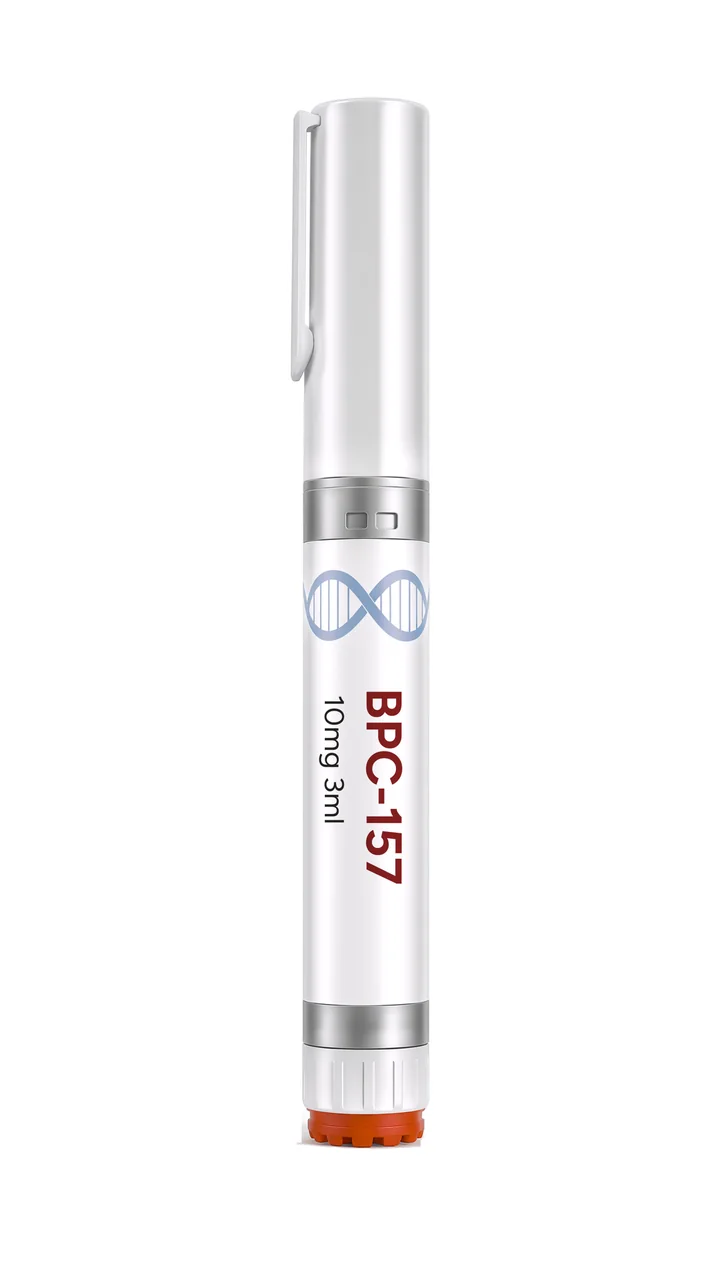 Image · product photo
BPC-157 10mg Pen
- Total
- 10 mg
- Volume
- 3 mL
- Conc.
- ≈3.33 mg/mL
Research use only · U.S. shipping · COA on request
-
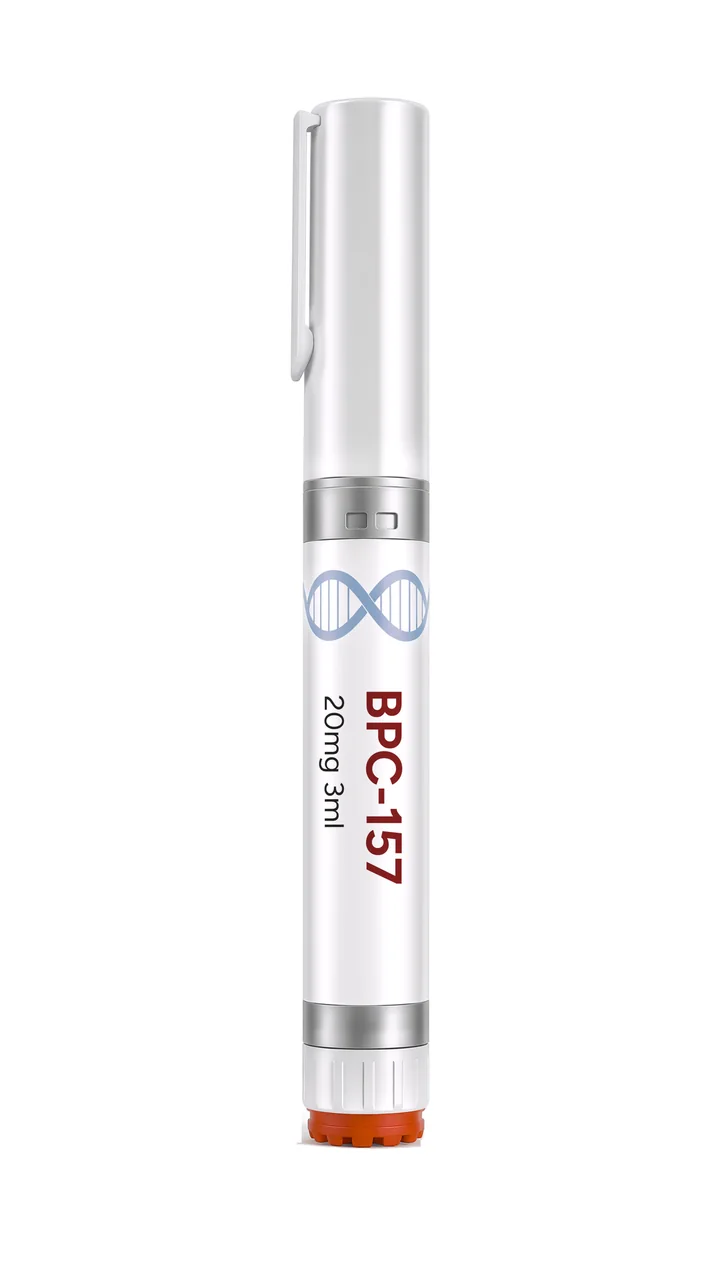 Image · product photo
BPC-157 20mg Pen
- Total
- 20 mg
- Volume
- 3 mL
- Conc.
- ≈6.67 mg/mL
Research use only · U.S. shipping · COA on request
02 Liquid vials
-
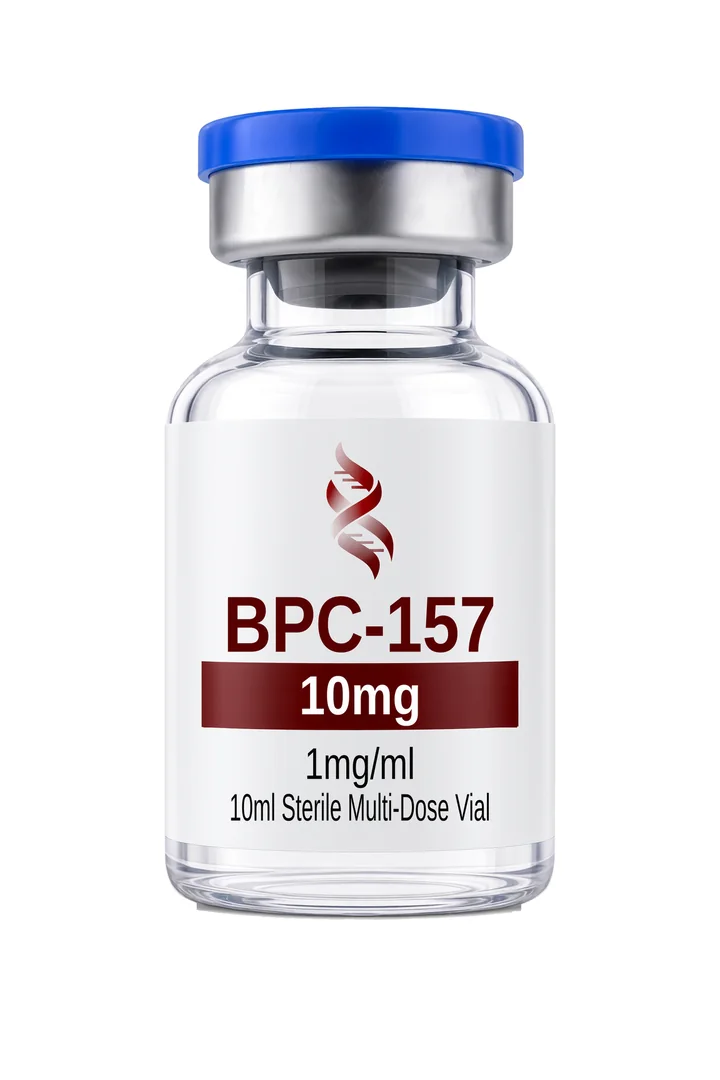 Image · product photo
BPC-157 10mg Vial
- Total
- 10 mg
- Volume
- 10 mL
- Conc.
- 1 mg/mL
Research use only · U.S. shipping · COA on request
-
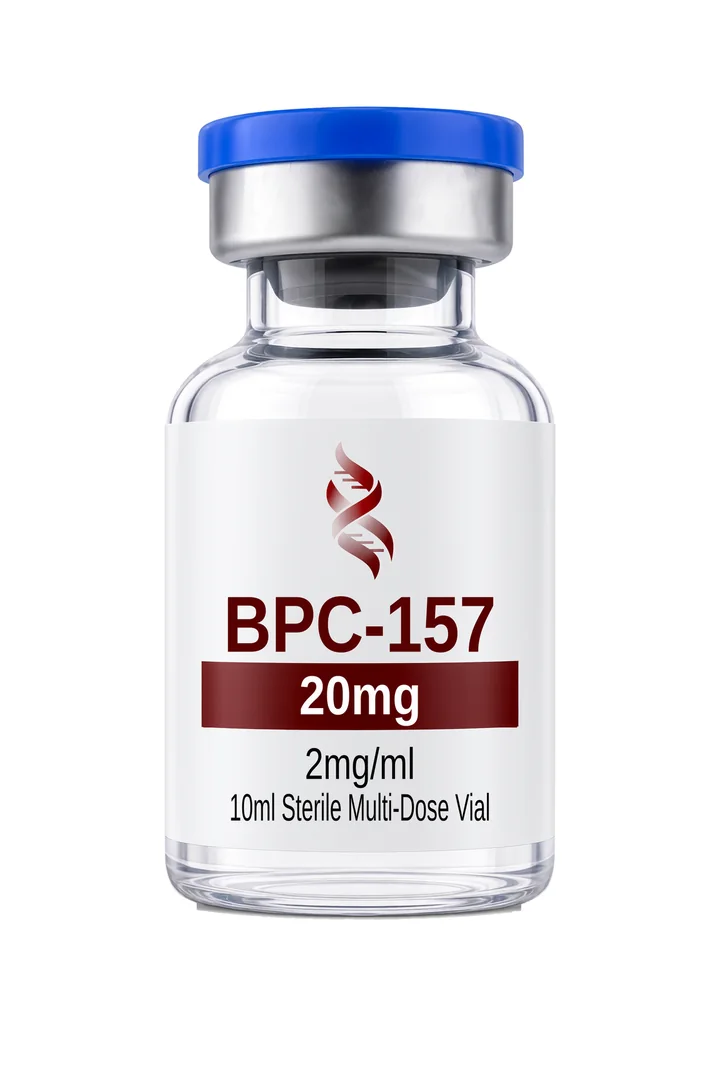 Image · product photo
BPC-157 20mg Vial
- Total
- 20 mg
- Volume
- 10 mL
- Conc.
- 2 mg/mL
Research use only · U.S. shipping · COA on request
All four ship already in solution, with no reconstitution needed. Freeze-dried (lyophilized) BPC-157 is available for bulk orders only; contact Palm Beach Vitality to ask.
Disclosure: bpc157pens.com and Palm Beach Vitality are owned by the same company. Prices and specifications are the seller’s, checked November 15, 2026.
§2 The molecule
Fifteen amino acids, one at a time.
In the lab, BPC-157 is built one amino acid at a time on a microscopic resin bead, starting from valine and ending with glycine. Each new link releases one molecule of water.
- 01GlyG
- 02GluE
- 03ProP
- 04ProP
- 05ProP
- 06GlyG
- 07LysK
- 08ProP
- 09AlaA
- 10AspD
- 11AspD
- 12AlaA
- 13GlyG
- 14LeuL
- 15ValV
N-terminus · GlyGold: the four prolinesC-terminus · Val
- Residues
- 15
- Peptide bonds
- 14
- Formula
- C62H98N16O22
- Molecular weight
- 1419.5 g/mol
§3 Production
From powder to pen.
Research peptides like BPC-157 are typically made by solid-phase synthesis, purified by HPLC, checked by mass spectrometry, then dried or dissolved and filled. Images are illustrative, not a specific manufacturer’s facility.
-
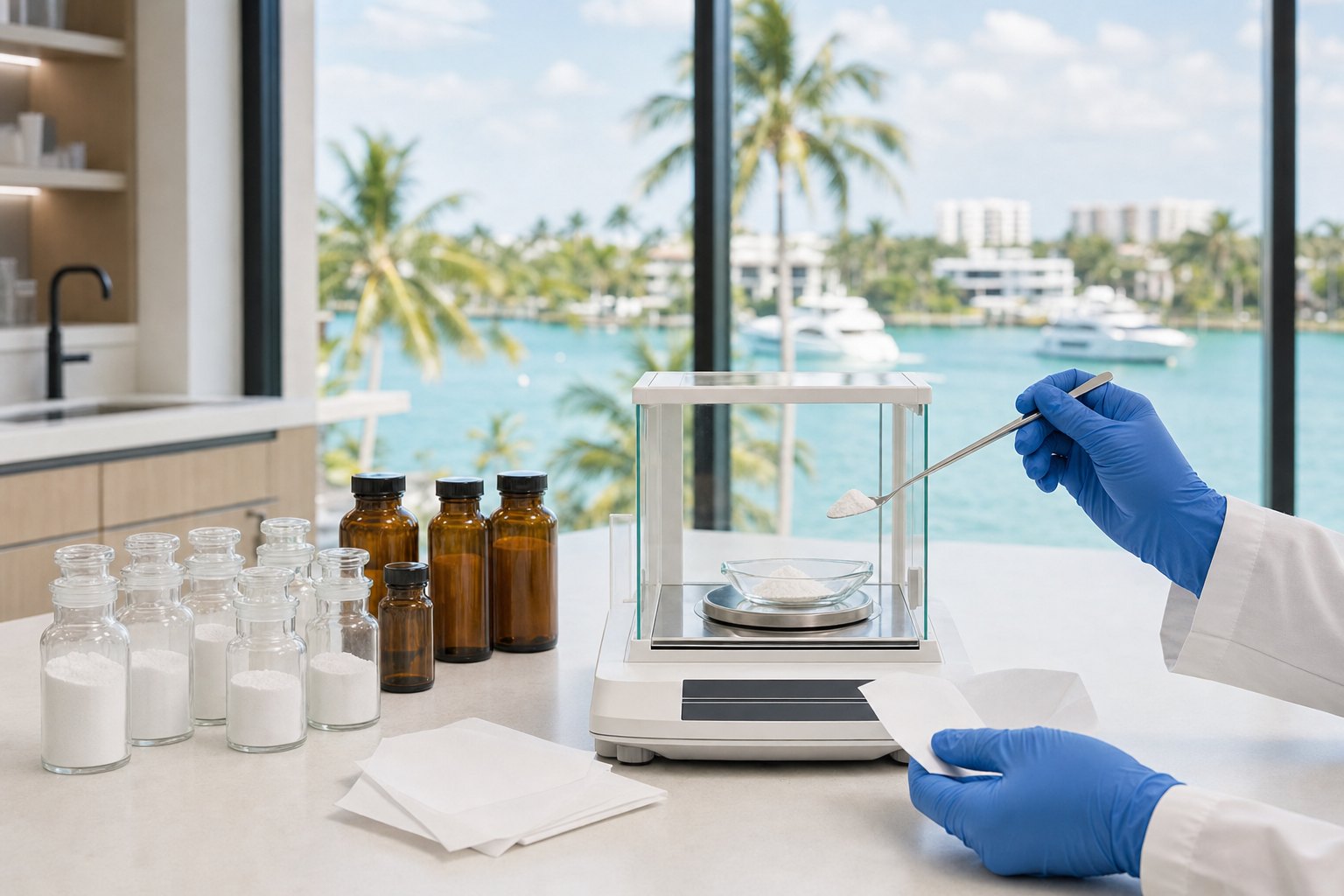 Image
01
Building blocks
Protected amino acids are weighed out, one for each of the 15 positions.
-
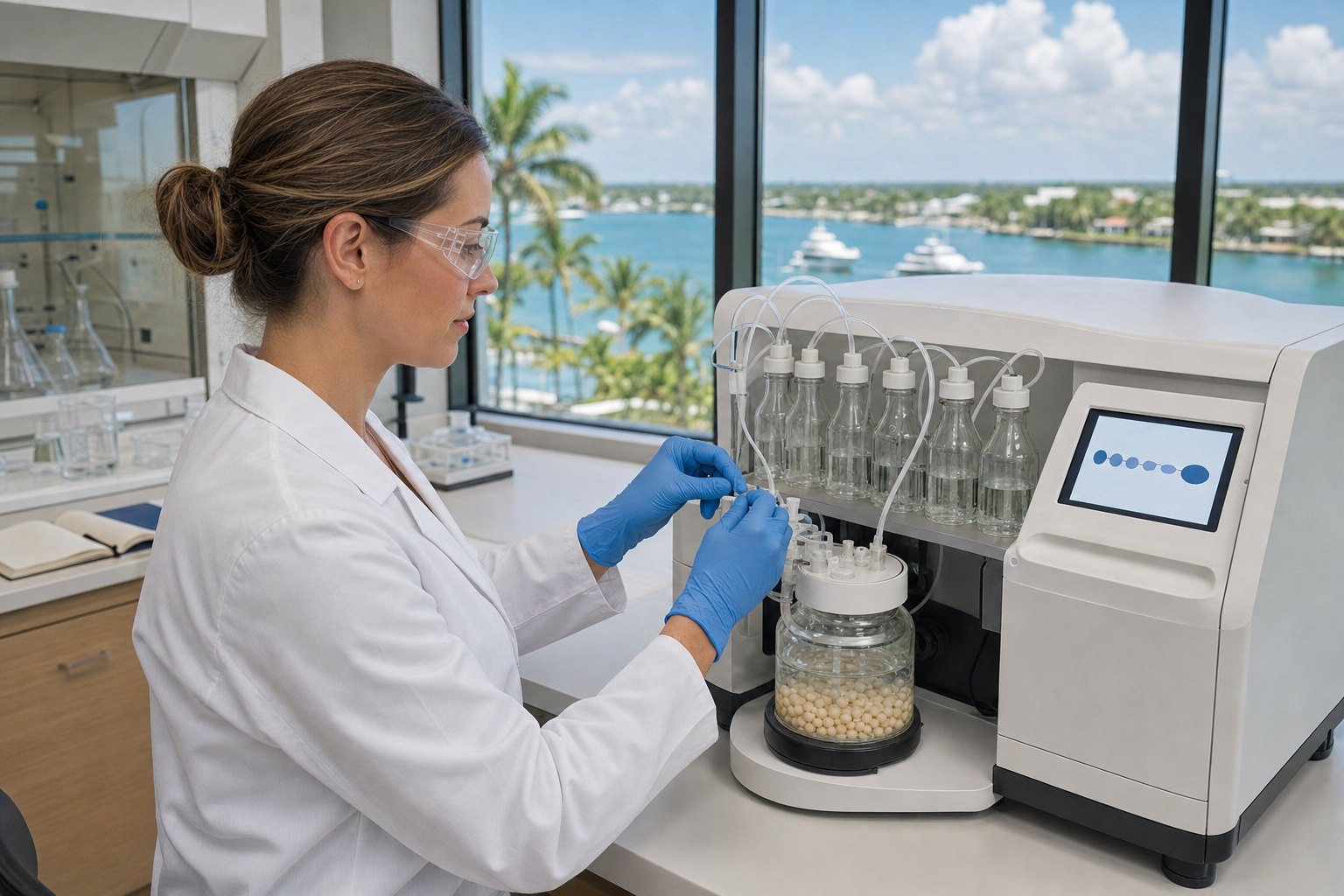 Image
02
Chain assembly
A synthesizer adds one amino acid per cycle to a chain anchored on resin beads.
-
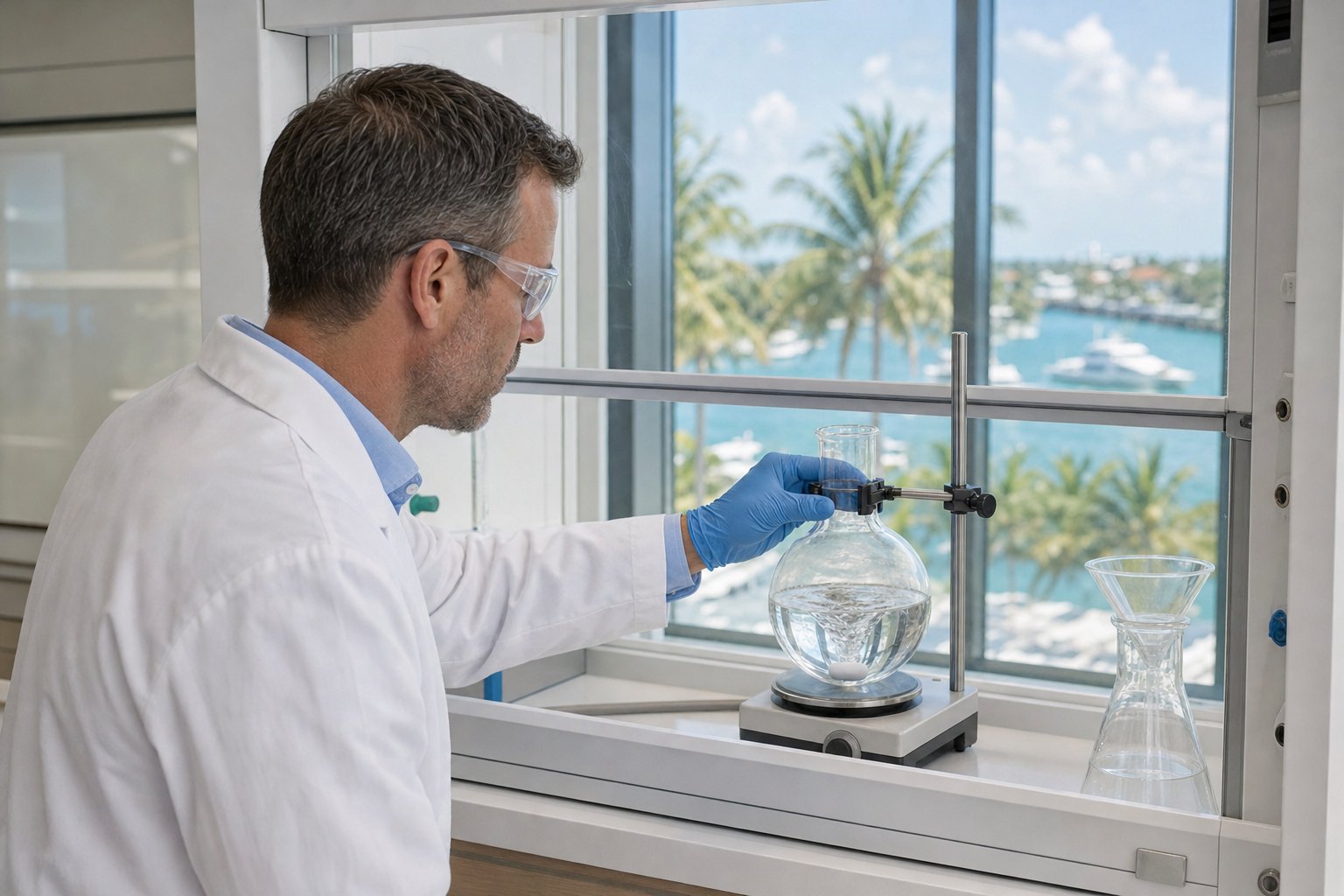 Image
03
Cleavage
The finished chain is released from the resin and its protecting groups removed.
-
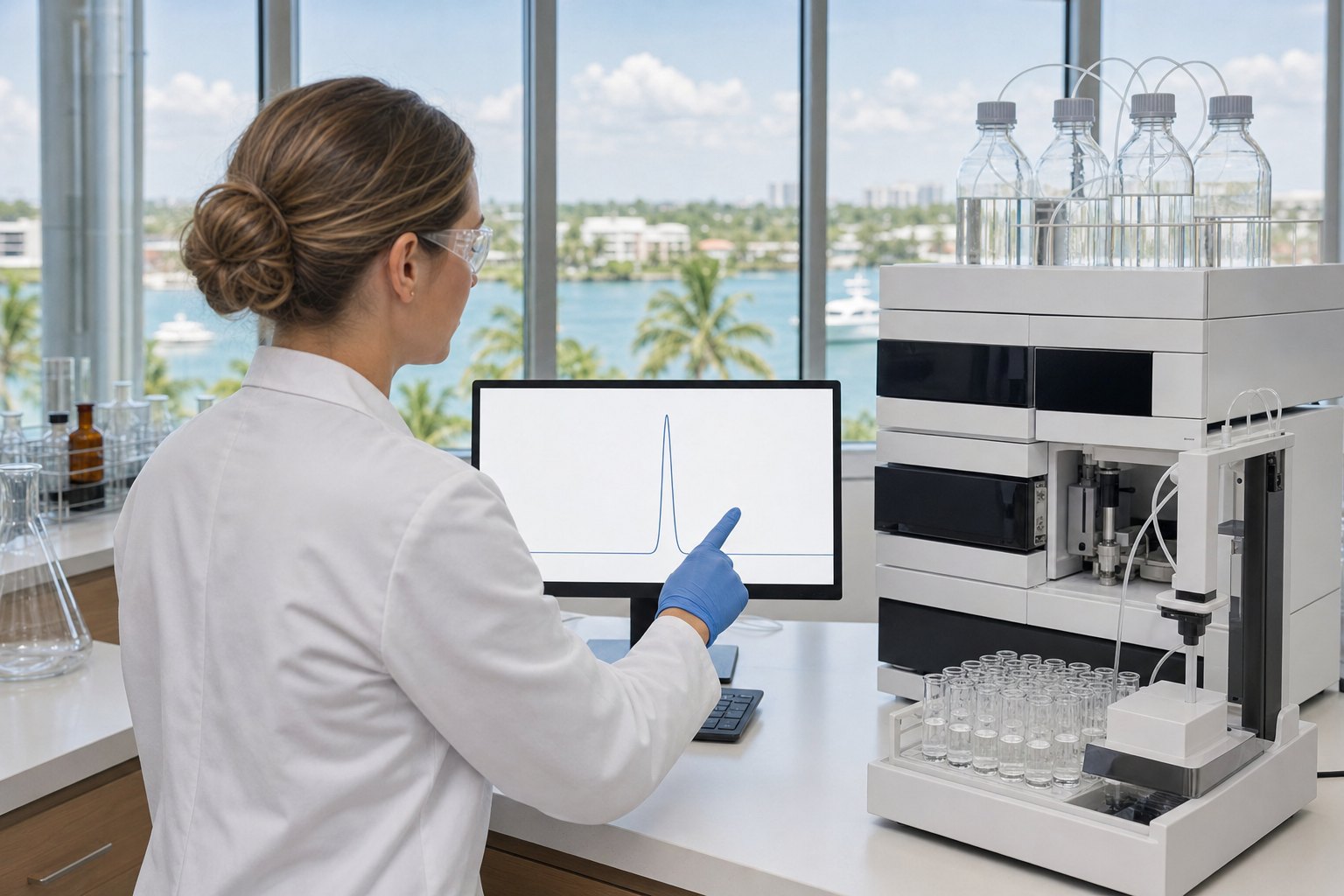 Image
04
Purification
HPLC separates BPC-157 from shorter or flawed chains.
-
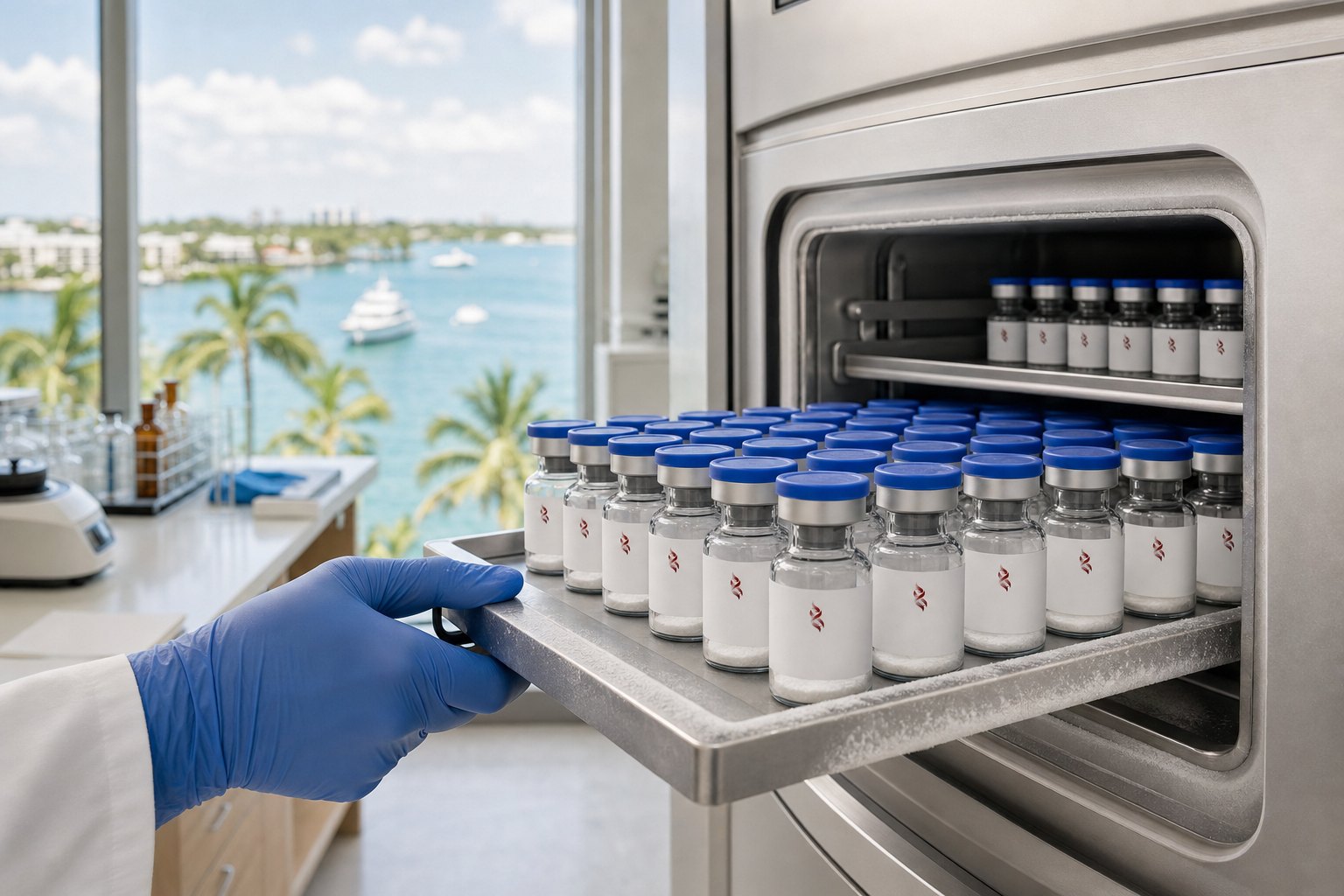 Image
05
Freeze-drying
Purified peptide is dried to a stable powder for storage and shipping.
-
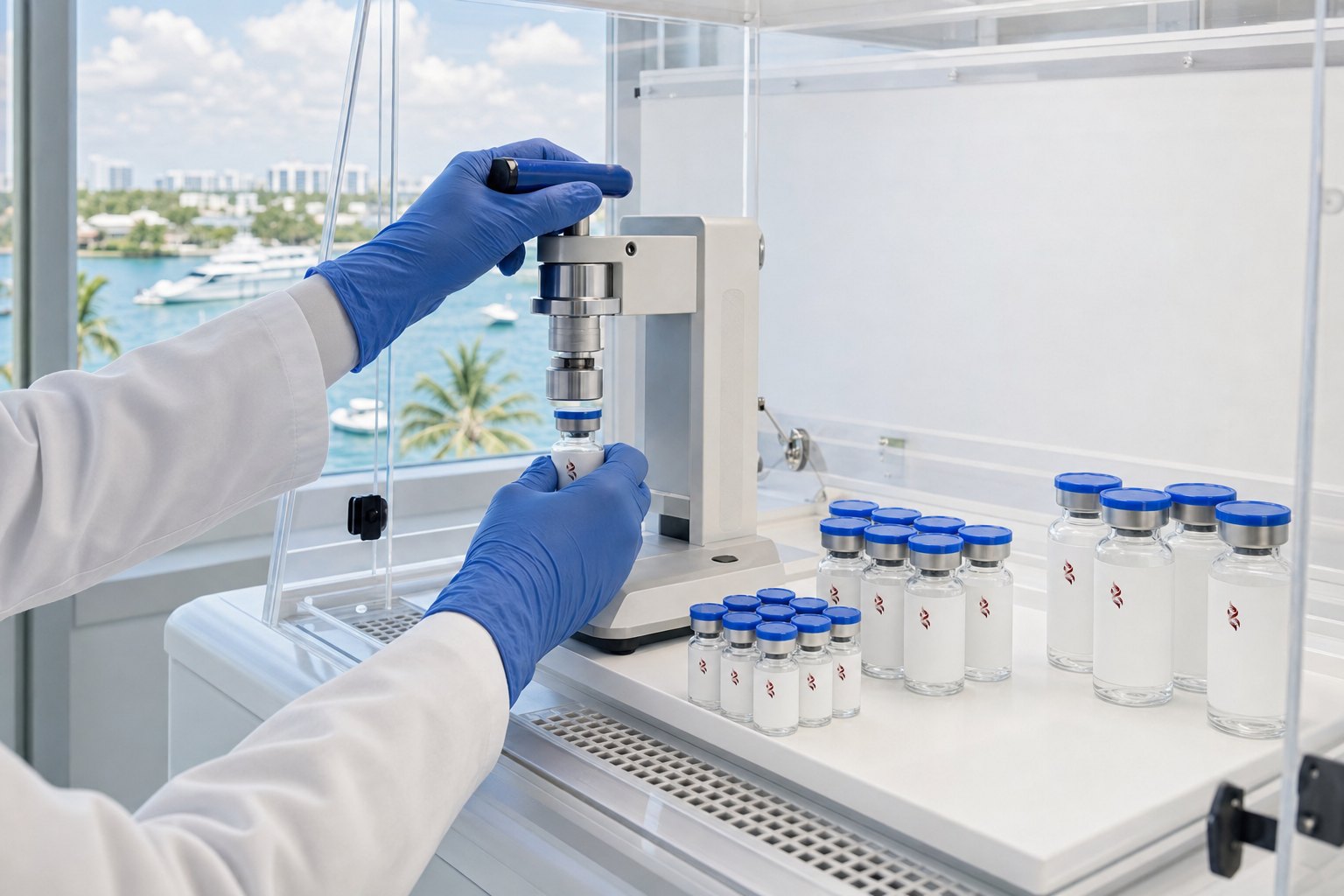 Image
06
Fill and seal
Solution is filled into vials or pen cartridges and sealed.
-
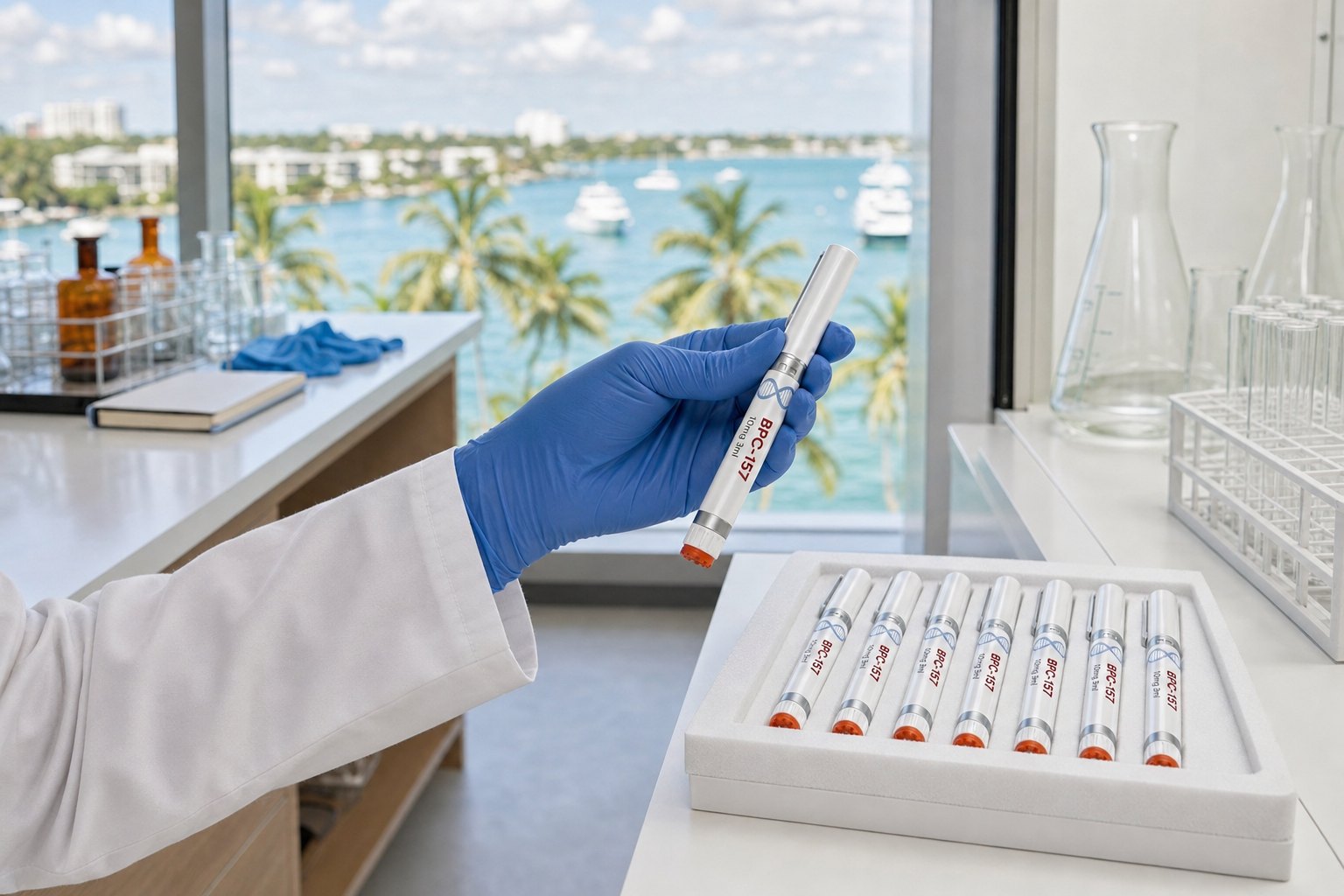 Image
07
Inspection
Each pen and vial is labeled with its lot number and checked.
-
Full process
Watch how BPC-157 is made
Read the guide →
§4 Pen vs vial
Fewer steps, or more volume.
A pen is a sealed 3 mL cartridge with a built-in dial. A liquid vial holds 10 mL and is drawn with separate lab tools, with a longer listed shelf life. Both ship already in solution, so neither needs reconstitution. Freeze-dried BPC-157 is available for bulk orders only.
| Pen | Liquid vial | |
|---|---|---|
| Volume | 3 mL | 10 mL |
| Dispensing | Built-in dial | Separate lab tools |
| Listed shelf life | 4–6 weeks | 16–20 weeks |
§5 Guides
Everything, cited.
Each guide answers one question and links every claim to a study, a regulator, or the seller’s specifications.
-
What is BPC-157?
Sequence, identifiers, and what lab research has and hasn’t shown.
Read → -
How it’s made
Synthesis, purification, drying and filling, step by step.
Read → -
Pen vs vial
Volume, dispensing, shelf life and price, side by side.
Read → -
Storage
Temperature, light, shelf life, and when to discard.
Read → -
Testing and COAs
What a certificate of analysis should show, and red flags.
Read → -
U.S. legal status
FDA, the July 2026 advisory vote, WADA and the military.
Read → -
The research
Twenty studies, picked from thirty, each with the authors and a plain-language note.
Read →
§6 U.S. status
Still unapproved.
An FDA advisory committee voted in July 2026 to recommend allowing BPC-157 in compounding. FDA has not acted on that vote.
FDA lists BPC-157 among compounding substances that may present significant safety risks.
FDA’s compounding advisory committee votes 8–6, with one abstention, to recommend reversing that.
The vote is advisory. No rule has been finalized, and BPC-157 remains unapproved.
§7 FAQ
Common questions.
Short answers to the questions researchers ask most. The full list has twelve.
All questionsIs BPC-157 FDA-approved?
No. As of November 15, 2026, BPC-157 is not approved by the FDA for any human or veterinary use.
Does a BPC-157 pen need reconstitution?
No. Every BPC-157 pen and vial Palm Beach Vitality sells ships already in solution. Only freeze-dried BPC-157 needs reconstitution, and it is available for bulk orders only.
How should BPC-157 pens and vials be stored?
Refrigerate at 2–8 °C (36–46 °F), protect from light, and do not freeze.
Why doesn’t this site give dosing information?
BPC-157 is not approved for human use, and the products this site links to are sold for laboratory research only. Dosing guidance would be medical advice this site cannot give.